
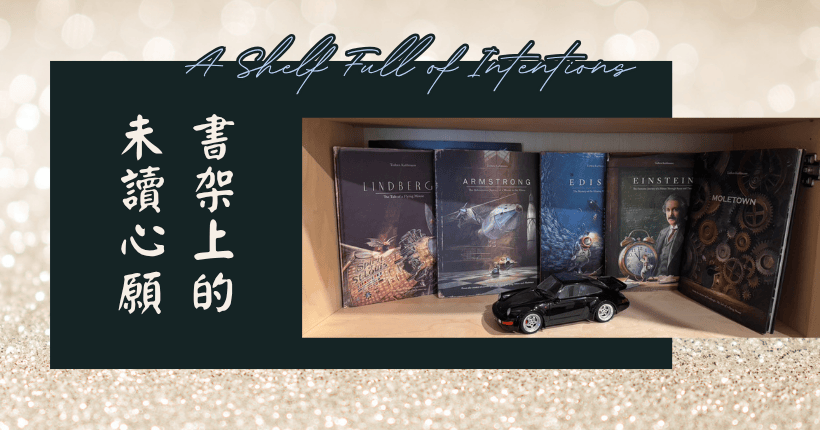
書架上的未讀心願 (A Shelf Full of Intentions)
翻譯/ bookmanta 今天,我學到了日文單字「積ん読」(tsundoku),這個詞讓我瞬間有了共鳴。它完美地描述了我與書籍之間的關係:總是買了書,卻讓它們堆積在家裡,從未讀過。我一直以為自己是個特例——有心閱讀那些買來的書,但總是無法抽出時間來讀。現在,我才知道自己並不孤單;原來竟然有一個專門的詞語來形容這樣的情況。 我自己最好的例子就是我的托賓·庫爾曼(Torben Kuhlmann)書籍系列。我擁有每一本英譯版——《阿姆斯壯》、《愛迪生》、《愛因斯坦》、《飛行鼠歷險記:林白的飛行夢想起點》和《鼴鼠鎮》。 這一切開始於八年前的法蘭克福書展。我當時看到《阿姆斯壯》這本書,對它和作者一無所知(老實說,我到現在還沒有很了解)。但當我看到書中的尼爾·阿姆斯壯是由一隻老鼠來描繪時,我毫不猶豫地決定購買它。從那時起,我便深深喜愛上了這些小老鼠故事。 那時,我以為這是一本適合孩子的圖畫書,也天真地告訴自己,有一天會讀給我未來的孩子聽。這一瞬間,成為了我庫爾曼書籍系列的開始。 從那時起,我一直在增加新書,直到擁有了整套作品。根據我的購書記錄,《愛因斯坦》是我在2022年購買的最後一本。自2017年以來,最接近我讀過的,就是翻看過《阿姆斯壯》,但當時才驚訝地發現它其實文字比我想像的多得多。原本我以為這是一本圖畫書,結果它的文字竟然也挺多。那次翻閱後,我有點猶豫,於是再也沒有打開過它們,除了偶爾重新整理書架。 直到兩個月前,我發現《艾爾哈特》推出了英文版。當然,我毫不猶豫地又訂了一本。現在,它正趕來我的書架,將與那些未讀的書一同並排擺放。 我的「積ん読」習慣不僅限於書籍。其實,我在威士忌上也有類似的習慣——因為它們看起來漂亮、有趣,或者有不錯的優惠就買下來,但我卻很少喝它們。這樣還能理解,畢竟我不太喜歡喝酒後那種迷糊的感覺。但對書籍來說,為什麼我不讀那些覺得有趣的書呢?我至今也無法完全理解,也許某一天我會弄清楚,或許我甚至會改變這樣的習慣。 現在,事情有了些轉變:我有了一個小孩,這讓我打破了這個循環。我經常會買兒童書籍,並且實際閱讀它們。常常是讀一次又一次。也許這是我閱讀習慣改變的起點?誰知道呢。對我來說,至少現在它算是一個進步。 ✍️投稿原文/ Stanley: Today I learned the Japanese word tsundoku (積ん読), and it immediately resonated with me. It perfectly describes my relationship with books: the habit of collecting them and letting them pile up, unread, at home. I always assumed I was an outlier—someone who meant to read the books they bought, but never quite got around to it. Now I know I’m not alone; there’s even a word for it. My best example is my collection of Torben Kuhlmann books. I own every English translation - Armstrong, Edison, Einstein, Lindbergh, and Moletown. It all started eight years ago at the Frankfurt Book Fair. I spotted Armstrong on display. I didn’t know anything about the book or the author (and, honestly, I still don’t). But I saw a story about Neil Armstrong portrayed by a mouse, and that was enough. I’ve always had a soft spot for anything mouse-related. I thought it was a children’s book and—naively—told myself I’d read it to my future child one day. That moment marked the beginning of my Kuhlmann collection. Since then, I kept adding another title until I had them all. According to my purchase history, Einstein was the last one I bought, in 2022. Since 2017, the most I’ve done is flip through Armstrong, only to be surprised by how many words it had. I had always thought of the series as picture books for kids, but they turned out to be much more text-heavy. That quick flip-through gave me pause, and I haven’t touched the books since - except to occasionally rearrange them on the shelf. Then, two months ago, I discovered Earhart had just been published in English. Naturally, I ordered it. And yes, it’s now en route to my bookshelf, where it will join its unread siblings. My tsundoku habits aren’t limited to books. I do the same with whisky—buying bottles because they’re beautiful, interesting, or a good deal, but rarely drinking them. In that case, it makes some sense: I don’t love the hazy feeling I get from alcohol. But with books? I don’t quite understand why I don’t read the ones I find interesting enough to buy. Maybe one day I’ll figure it out and maybe I’ll even change. But here’s the twist: now that I have a toddler, there’s a break in the cycle. I buy children’s books regularly and I actually read them. Often. Sometimes over and over. Could this be the beginning of a new reading habit? Maybe. For now, I’ll count it as progress.
閱讀更多→